


How to Choose the Right Helmet Size and Safety Gear for Your Child’s Bicycle

A bicycle helmet is a necessary accessory when your child starts to practice cycling. This assures the safety of your child and prevents bad falls, significantly decreasing the chances of severe injuries.
Parents must remember that although their children may be having fun riding their bikes, there are also instances when the child might fall. To avoid a tragedy that may occur to your child, you ought to purchase a bicycle helmet to cover your child's head.
The following is a Parent's Guide to Safe Cycling Gear for Children. Read the article till the end to find your way around, choosing the right bike helmet for your child!
Why Safety Gear Is a Must for Kids’ Cycling?
Biking is enjoyable and healthy, but it is risky, particularly for children. Safety equipment guards young riders and trains them to develop intelligent practices early.
-
Common injuries from biking without a gear
Children are also likely to fall, and this may cause head injuries, scrapes, and fractures. Without helmets and pads, even minor accidents can result in serious injuries.
-
Safety gear as a confidence booster for kids
Kids can get secure by wearing helmets, knee pads, and gloves. This assurance makes them ride more freely and, at the same time, be shielded.
-
Benefits of early safety habits
Learning responsibility and risk awareness is done through early education on how to stay safe. Children who have been brought up wearing safety equipment will tend to remain safety-conscious even as adults.
Factors to Consider When Picking the Right Helmet Size in Children
A helmet of the right size is very important in making kids safe on the bicycle, so how to measure helmet size for a child? The right size will be comfortable, protective, and willing to wear it frequently.
-
How to measure your child’s head size
If you are wondering how to choose the Right Helmet Size for Kids, measure around the largest portion of your child's head. Choose the area just an inch above the eyebrows, using a soft measuring tape, and note the measurement in centimetres to be accurate.
-
Helmet size chart by age and measurement
Although helmets are sized differently depending on the brand, most of them are marked according to the head circumference. As an example, the kids bicycle helmet size must be around 51-56 cm for children who are between 2 to 4 years.
-
Key features to look for in a child's helmet
Seek out adjustable straps, a snug fit with no pressure points, and safety certifications such as CPSC. Kids can also be motivated to wear their helmets regularly through ventilation, lightweight materials, and fun colors.
Key Safety Certifications to Look For
Helmets that are safety certified are necessary as far as the safety of your child outdoors is concerned. Certifications guarantee that the helmet has gone through rigorous tests of impact resistance and general safety.
-
ISI, BIS, and international helmet standards
In India, the helmet you purchase should be checked against ISI (Indian Standards Institute) and BIS (Bureau of Indian Standards). These show that the product is safe to use as per national standards. The international safety standards are ensured as well with such international standards as DOT (USA) and ECE (Europe).
-
Why safety certifications matter for kids
When riding a bicycle or skating, children tend to fall. A certified helmet also lowers the chances of severe head injuries since it offers tested protection. It makes sure that the helmet is of good material and is impact-absorbing.
-
How R for Rabbit ensures helmet safety
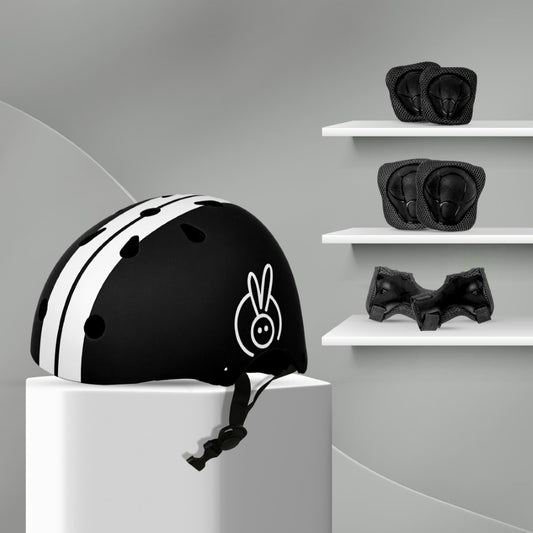
R for Rabbit helmets have child safety as the priority. They are ISI and BIS compliant and go through numerous tests to ascertain the high performance, which provides the parents with a sense of relief.
Additional Bicycle Safety Equipment Every Child Requires
The risks of being injured in case of a fall can also be minimized by other safety gears, which are not helmets. With the right accessories, his or her rides will be safer and less fearful.

-
Knee and elbow pad: fall protection
The knee and elbow pads will be required to prevent scrapes, cuts, and bruises. They cushion joints in case one falls, and they are especially useful to those who are learning to ride or children who tend to be adventurous with their bikes.
-
Gloves and reflective gear for visibility
Bike gloves avoid blisters on small hands and improve the hold on the handlebars. Also, using reflective clothing in the form of vests, stickers/bands that make children more visible to motorists, especially when they are riding in low-light or at night.
-
Should full-face helmets or body armor be used?
Body armor and full-face helmets offer the protection that is needed in mountain biking or BMX riding. They cover the face, chest, and spine; hence, they are best worn by older children who are involved in high-speed or off-road biking.
Proper Fit and Adjustment Tips
A good-fitting helmet and other child bike safety gear are the best protection. Poor sizing may decrease efficiency and cause injury in case of a fall or collision.
-
How to cross-check if the helmet fits correctly?
The helmet should be at the same level on the head and not slanting on the forehead. It must fit snugly but not tightly and must not shift when your child shakes his or her head. Never go against the sizing or buying guide, depending on the head circumference.
-
Straps, padding, and buckle safety check
Make the chin straps to create a V shape under the ears and close the buckle under the chin. The padding of the helmet must fit the head on all sides, and the buckle must be clicked in place without pinching the skin.
-
At what point to change or increase the gear?
Change helmets following a crash, regardless of whether there seems to be no damage. Increase the size of the gear that is tight, causes marks, or your child complains that it is uncomfortable.
Some Pitfalls to Avoid While Buying
One should be keen when selecting the safety equipment to be used on their child. The avoidance of the most common mistakes can do much to help keep safe.
-
Skipping proper measurements
Most parents will estimate the kids' bicycle helmet size or gear without taking the head or body measurements of the child. This usually causes a bad fit, less safety, and frequent replacements. Head circumference should always be measured with the help of a measuring tape and compared to the size chart.
-
Ignoring the child's comfort and weight
Children may be deterred from wearing heavy or uncomfortable gear. Choose airy and light material. Padded interiors and adjustable straps also make it last longer, increasing its comfort.
-
Settling for uncertified or toy-grade gear
Children may be deterred from wearing heavy or uncomfortable gear. Choose airy and light material. Padded interiors and adjustable straps also make it last longer, increasing its comfort.
Recommended Age-Wise Gear from R for Rabbit
R for Rabbit offers safety equipment of the right age. The proper gear, according to child’s age, is fitted, comfortable, and offers maximum protection.
-
Best gear for toddlers and balance bike users
In the case of toddlers aged between 1.5 and 3 years, R for Rabbit offers lightweight helmets, which have soft padding, adjustable straps, and sets of knee-elbow pads. The equipment is soft to the young and sensitive skin and provides the necessary protection on a bike.
-
Gear for kids aged 4 to 7 riding training bikes
The children of this age require heavy-duty helmets that are ISI certified and more rigid knee and elbow pads. R for Rabbit gear has an adjustable fit and breathable fabric, which makes it secure as children grow and become more adventurous.
-
Protective gear for 8+ year olds on full-size bikes
Older children have access to helmets that are more impact-resistant, fully padded, and even full-face. We at R for Rabbit also have reflective features that provide visibility and safety when riding faster.
Teaching Kids to Use Safety Gear Consistently
One should learn to wear safety equipment at a young age. Doing it right means that children can be trained to accept helmets and pads as a normal and even fun part of riding.
-
How to encourage helmet-wearing habits
Start young and ensure that helmets are non-negotiable every time a rider is on the road, even on a short ride. Talk about the significance of safety in a simple way and praise or give small rewards to kids who develop good habits.
-
Funny ways of personalizing and personalizing their gear
Make children choose the color of their helmets or stick some interesting stickers and patterns on them. When children feel that they own their gear, they are more willing to wear it and show it to their friends.
-
Lead by example: why do adults wearing helmets help?
Children copy the adult behavior. Parents and caregivers should wear helmets and safety equipment, as this will convey a powerful message that safety matters to all and not only children.
Also Read:
- Top 5 Mistakes Parents Make When Buying Safety Gear For Kids
- 10 Scooter Safety Tips for Kids by R for Rabbit
- 19 Must-Follow Safety Guidelines for Baby Walkers
- Bicycle Safety for Kids: Tips to Ensure a Secure Ride
- How to Safely Ride a Kids Scooter on Uneven Surfaces
Moving Forward: Where to Buy Secure and Quality Safety Gear!
Where one buys safety gear, its quality is also important as the gear itself. Quality sources will ensure that you have the best products that have been certified and child-friendly.
Brands that target parenting know the peculiarities of children. They are more concerned with comfort, safety certification, and friendly designs. Our products offer higher safety and quality standards than generic ones.
R for Rabbit is a well-known brand that parents can trust because of its safety and innovativeness. Our products are made with ergonomic comfort, all gears are ISI/BIS certified and tested to be durable, and hence a sure bet with growing kids.
R for Rabbit has a fast delivery, returns, and many value added services like combo packs or discounts. We offer effective customer support, and this makes the experience of purchasing online a smooth one for the parents.
Faq's On How to Choose the Right Helmet Size and Safety Gear for Your Child’s Bicycle
RELATED PRODUCTS

 Bestseller

- ₹ 4,651
- ₹ 5,994
- 22% off
Bestseller

- ₹ 4,948
- ₹ 6,993
- 29% off

- ₹ 2,289
- ₹ 3,393
- 33% off
Bestseller

- ₹ 3,958
- ₹ 5,193
- 24% off

- ₹ 2,289
- ₹ 3,393
- 33% off


